
UK Casinos Not on GamStop 2026: The Winnings Dispute Test
 Available in GB
UK casinos not on GamStop are offshore gambling sites that are outside the British self-exclusion scheme, not British-licensed alternatives. That distinction matters most when winnings are challenged: UK complaint and regulatory protections do not apply, and a foreign licence is not a UK licence. The figures on withdrawals are reassuring only inside the regulated system.

The name is often typed “gamestop”, but the scheme is GamStop. Gamstop Online blocks accounts with participating operators licensed in Great Britain. Sites without a UK Gambling Commission licence are not connected to that scheme; the Commission’s account of the offshore position is consistent with that, though the specific offshore exclusion is marked unconfirmed in the fact sheet. Crucially, an offshore site is never a legitimate way round self-exclusion. A GamStop exclusion holds for its full chosen term and stays in place afterwards until the person contacts GamStop to remove it.
As of 12 November 2026, the dispute question is not whether an offshore site advertises a generous bonus or a rapid payout. It is who can make it explain a refusal, and what happens if the explanation is poor. The Commission says commercial gambling services offered to people in Great Britain require its licence, even where an operator holds a licence elsewhere. The British framework sets a useful comparison: disclosed terms, identity checks before gambling and access to approved alternative dispute resolution. Offshore operators vary, and the gap between a proper foreign regulator and a logo pasted onto a page can be considerable.
For help with gambling-related harm, GamCare’s National Gambling Helpline is free on 0808 8020 133, 24 hours a day, every day. Support is also available through live chat and WhatsApp. This page is about the market and its rules, not a recommendation to gamble.
The British Benchmark Is About More Than Speed
A useful benchmark comes from the Gambling Commission’s withdrawal data for June to September 2024, covering 44.2 million withdrawals by customers of large online operators. It found that 96.3% cleared automatically, 3.5% cleared within 24 hours and 0.1% took up to 48 hours. The small remainder is where disputes and verification become more visible; the headline is not a promise that every withdrawal is instant.
The Commission sets no fixed maximum number of days for a withdrawal. Instead, British-licensed operators must use fair and transparent terms, explain a delay or refusal, and avoid adding an identity-document hurdle at withdrawal if they could reasonably have asked earlier. Anti-money-laundering obligations can still require information at that point. The Commission says it is not fair to introduce friction simply to frustrate a withdrawal.
A British licence also gives a formal route when an internal complaint stalls: if the operator has not resolved a dispute to the customer’s satisfaction within eight weeks, it must offer free referral to an approved ADR entity. That process does not guarantee a win. But it is a process with rules, a regulator and a defined route. Offshore, those protections do not follow a player across the border. “Licensed abroad” is not a synonym for “covered in Britain”.
What Offshore Licensing Does—and Does Not—Prove
A foreign licence may tell something about the operator’s home regulator and its obligations there. It does not authorise the operator to offer gambling commercially to consumers in Great Britain without a Gambling Commission licence. Nor does it give the Commission a power to resolve a customer’s individual offshore dispute or retrieve funds.
Curaçao’s licensing system changed under the LOK, effective 24 December 2024: direct licensing and supervision moved to the Curaçao Gaming Authority, and old private master-licence arrangements ceased issuing new licences. Legacy orange certificates ended on 15 October 2025. A historic licence number or familiar seal is therefore weak evidence on its own. The authority’s Certificate of Operation is domain-specific; the separate licence certificate is not. A mismatch between the approved domain and the site is a serious warning, not a clerical quibble.
Other jurisdictions have their own systems and limitations. For instance, the Kahnawà:ke Gaming Commission has a permit-verification programme, while Anjouan’s published framework names ADR providers. The existence of a complaint mechanism is better than none, but it is not the British ADR route and does not make the operator UK-licensed. Claims about regulatory quality deserve the same scrutiny as claims about a bonus. A badge is not a judgment.
Compare the Routes When Winnings Are Contested
| Dispute feature | British-licensed operator | Offshore operator without a UK licence |
|---|---|---|
| Regulator | Gambling Commission oversight | Foreign regulator, if the site has a valid licence |
| Internal complaint | Required operator procedure | Depends on the site’s terms and local rules |
| Escalation | Free approved ADR after eight weeks if unresolved | Foreign ADR or regulator route may exist; eligibility and enforcement differ |
| Withdrawal delay | Must be fair, explained and consistent with terms | No UKGC withdrawal protections apply |
| Domain check | Commission register should match activities and domain | Verify the exact domain with the named foreign authority |
The distinction is plain enough to fit on a payslip. But it is often obscured by marketing that puts “UK” beside “casino” while burying the absence of a UK licence below the fold.
The Terms Are Where a Winnings Dispute Turns
A dispute usually turns on the operator’s stated reason for withholding money: identity, suspicious activity, bonus conditions, a payment mismatch or an alleged breach of rules. First-time identity checks should not be a surprise in a properly run operation. British licensees must establish identity before allowing gambling and tell customers in advance what information or documents may be needed. Verification can be electronic or involve documents such as a passport, driving licence or household bill.

Later checks are possible. Personal details can change, unusual activity may prompt lawful anti-money-laundering enquiries, and a request for information can be legitimate. The dividing line is whether the operator explains the reason and applies its terms consistently, rather than inventing a new condition once a withdrawal is requested. Under British licence condition 17.1.1, a licensee cannot make withdrawal conditional on information it could reasonably have requested earlier, subject to other legal obligations.
Bonuses are a frequent source of argument. Since 19 January 2026, British licensees cannot set wagering requirements above 10 times bonus funds, and must not mix product types in one incentive. Offshore sites are not bound by that UKGC cap. Their terms may include higher playthroughs, game contribution limits, a deadline, a maximum bet while wagering, or a cap on bonus-derived cash-outs. These clauses need to be read before accepting an offer. A deposit balance is not the same thing as a bonus balance, and a foreign operator’s terms do not inherit the UK’s fair-terms protections merely because the page is in English.
Warning signs include a rule that lets the operator decide “at its sole discretion” whether winnings count, a vague allegation with no clause identified, an unexplained sequence of repeated document requests, or a new limit introduced after the balance has grown. None proves wrongdoing by itself. Together, they make a dispute harder to resolve and the site harder to trust.
Five Signs Worth Checking
The Licence Names the Actual Operator
Check the legal entity in the terms, then compare it with the regulator’s public register. A seal with no clickable verification, an expired certificate or an unrelated company name is not evidence of a current licence.
The Domain Matches the Record
Open the regulator’s verification page rather than trusting a copied badge. For Curaçao, a Certificate of Operation should identify the player-facing domain and redirect to the authority’s verification service. If the domain differs, treat the site as unauthorised until proven otherwise.
The Complaint Route Is Specific
Look for the internal complaint stages, a response timeframe and the named external dispute body. Check that the ADR provider itself recognises the operator. “Contact support” is not a dispute policy; it is a corridor with no exit sign.
Withdrawal and Bonus Terms Are Visible
Read the clauses on verification, withdrawal timing, game contributions, maximum bets and bonus cash-out limits before an offer is accepted. On a British-licensed site, significant promotional conditions must be prominent and readily accessible. A crucial term found only after a win is a poor advertisement for the operator.
The Site Explains How Funds Are Held
British licensees must disclose whether customer funds are protected if the business becomes insolvent and at what level. A separate account alone does not guarantee repayment. Offshore sites may offer different disclosures or none that can be checked independently; silence is not protection.
A Practical Check Before Trust Is Placed
- Identify the operator, not just the site name. Terms should state the legal entity and address. Without that, a complaint has no clear target.
- Check the licence at the regulator’s source. Match the operator and exact domain against its register; this catches stale seals and cloned credentials.
- Read withdrawal and bonus clauses together. A withdrawal may be held over wagering, game contribution or identity terms. Knowing which clause applies is the difference between a real condition and a moving goalpost.
- Check the complaint escalation route. Confirm the name and eligibility rules of any ADR provider before money is involved. A foreign route may be difficult to use from Britain and is not UK ADR.
- Keep the record. Save the relevant terms, transaction confirmations and written complaint replies. Clear dates and documents make it easier to test whether an explanation changed.
- Separate urgent support from a money dispute. GamCare’s National Gambling Helpline is 0808 8020 133, free and open 24/7; it offers support, not a payout adjudication service. The Gambling Commission also records complaints but is not an ombudsman and cannot recover an individual’s funds.
The Search Phrases, Without the Sales Pitch
A “uk casino not on gamstop” is not, by that description, a UK-licensed casino. Likewise, “uk online casinos not on gamstop” and “casinos not on gamstop uk” usually describe offshore sites marketed towards British players, not a category authorised by the Commission. “Best” is especially slippery here: a site may pay promptly on one occasion and still have weak dispute protections when a larger claim is challenged.
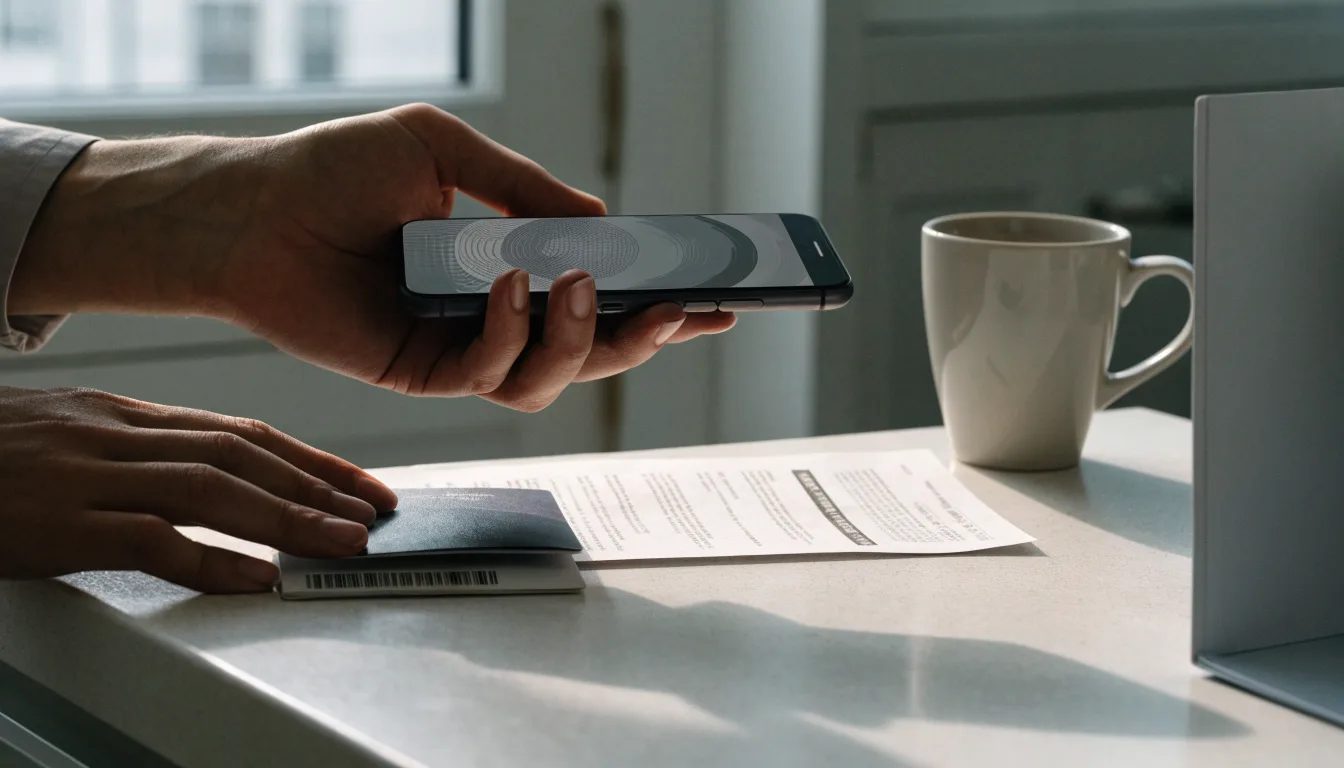
The same distinction applies to casino sites not on GamStop UK searches, new sites, free spins and payment claims. A casino not on GamStop UK new may have little operating history; that is a reason to demand better evidence, not less. A “no deposit” offer can carry strict wagering and withdrawal conditions. Payment availability—whether a site mentions PayPal or another method—does not establish that it is licensed or that a disputed balance can be recovered. Operators are best judged by verifiable rules and complaint access, not by the size of the welcome banner.
Frequently Asked Questions
Are offshore casinos not on GamStop legal for people in Great Britain?
The Gambling Commission says commercial gambling services offered to consumers in Great Britain require a Commission licence, even where the operator has a licence elsewhere. Section 33 of the Gambling Act 2005 makes providing facilities without the relevant operating licence an offence. The fact sheet does not establish an equivalent general offence for an adult customer merely using a site.
Can the Gambling Commission get disputed winnings back from an offshore site?
No. The Commission says its role is regulatory, not that of an ombudsman; it cannot decide an individual complaint or recover a customer’s money. It records complaints and may use information to inform its regulatory work. A foreign regulator or ADR provider might have a route, but that depends on the operator, the licence and the provider’s own eligibility rules.
What happens if a British-licensed casino delays a withdrawal?
The operator should explain the delay or refusal, subject to restrictions on tipping off in money-laundering cases. It cannot demand at withdrawal identity information it could reasonably have requested earlier, although another legal obligation may require information at that stage. If the internal complaint remains unresolved after eight weeks, free referral to approved ADR must be available.
Do foreign licences guarantee that winnings will be paid?
No licence is a guarantee of a particular outcome or a player’s recovery if a business fails. A valid licence can indicate regulatory obligations, but the regulator’s powers, complaint system and enforcement differ by jurisdiction. Verify the specific operator and website domain directly with the authority; a general company licence certificate may not authorise that particular player-facing site.
Are bonus disputes treated the same offshore as in Britain?
No. From 19 January 2026, British licensees are subject to a maximum 10-times wagering requirement on bonus funds and a ban on mixed-product incentives. Offshore operators are not bound by those UKGC rules. Their own terms may apply higher wagering, game-weighting rules or a bonus cash-out cap, so the wording and the regulator’s ability to enforce it matter.
Does GamStop cover a site with an overseas licence?
GamStop Online covers participating gambling operators licensed in Great Britain; offshore sites without a UKGC licence are outside that system, although the fact sheet marks the explicit offshore statement as unconfirmed. Self-exclusion is not a loophole to route around. The chosen term cannot be ended early, and exclusion remains after it ends until the person contacts GamStop to remove it.
The Measure That Matters
A winnings dispute is ultimately a test of whether rules can be checked and enforced, not whether a site calls itself British. The British benchmark is clear: among large operators, 96.3% of withdrawals cleared automatically between June and September 2024.
Casinos Not on GamStop
Content created by the «Fast Payout Online Casino» team